7 Steps to Learn Forex Trading Without Geometric Noise
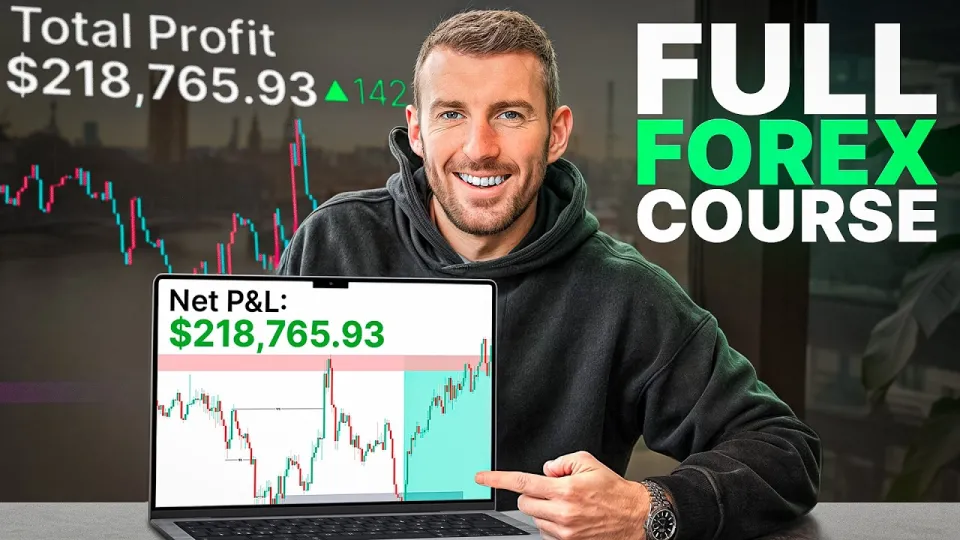
Video: Beginners Guide To Forex Trading In 2026 (+3 hours)
Need articles like this for your video? They help promote it on YouTube and Google — order them in the Telegram bot @sat_sit_bot. It writes articles around your video, embeds the video and publishes them on popular niche websites (no ads). Free trial — 50 articles.
· based on the channel Matt Donlevey - Photon Trading
Key takeaways
- Forex is a decentralized over-the-counter market where currencies trade in pairs; the bid-ask spread is your immediate cost.
- Retail forex trading requires a broker, a tested strategy, and strict risk management—most beginners lose money without these.
- Market microstructure (order book, order flow) and auction market theory explain price movement better than geometric patterns.
- A complete trading plan includes entry criteria, position sizing, journaling, and a backtested edge.
- Matt Donlevey - Photon Trading offers a free 3-hour beginner guide covering these concepts in depth.
Forex trading is the exchange of one currency for another on a decentralized over-the-counter market, and learning it requires understanding market microstructure, order flow, and risk management rather than chart patterns alone. This guide distills the core curriculum from Matt Donlevey's Photon Trading beginner course into seven actionable steps, so you can build a foundation without bouncing between scattered tutorials. For a free structured course and cheatsheets, visit Photon Trading's free training.
What Forex Trading Actually Involves
Forex is not a single exchange but a network of banks, brokers, and liquidity providers quoting currency pairs around the clock. When you trade EUR/USD, you are simultaneously buying euros and selling US dollars; the quoted price has a bid (what buyers pay) and an ask (what sellers accept), and the difference—the spread—is your first trading cost. Retail traders access this market through brokers who route orders to liquidity providers, and the order book shows resting limit orders that can act as support or resistance. Understanding these mechanics is the foundation for any strategy, because price moves when aggressive market orders consume available liquidity. Matt Donlevey emphasizes that geometric shapes do not explain why price moves; the underlying auction process does.
Step 1 Understand Market Microstructure and Order Flow
Market microstructure is the study of how orders interact in the order book, and it explains why price moves in the short term. The order book lists limit orders at various prices; when a market order hits, it fills against the best available limit orders, consuming liquidity and potentially moving the price. Order flow is the sequence of these aggressive trades—buying pressure lifts the ask, selling pressure hits the bid. Auction market theory adds that markets seek fair value by balancing buyers and sellers; when one side becomes aggressive, price auctions toward the next area of liquidity. Learning to read these dynamics gives you a logical basis for entries and exits, rather than relying on chart patterns alone.
Step 2 Master Market Structure and Multi-Timeframe Analysis
Market structure is the sequence of swing highs and lows that reveals the direction of the auction. An uptrend prints higher highs and higher lows; a downtrend prints lower highs and lower lows; a range shows no clear sequence. Matt Donlevey teaches three types of structure—trending, ranging, and transitional—and how to identify them on multiple timeframes. Multi-timeframe analysis means aligning your trade with the higher timeframe trend while using a lower timeframe for precise entries. For example, a daily uptrend combined with a 15-minute pullback into demand gives a higher-probability long setup. This top-down approach prevents fighting the dominant flow.
Step 3 Identify Supply, Demand, and Liquidity Zones
Supply and demand zones are price areas where institutional orders previously caused a strong move, and they often act as support or resistance when revisited. A demand zone forms after a sharp rally from a base; a supply zone forms after a sharp drop from a base. Liquidity concepts refer to clusters of stop-loss orders and pending orders that smart money may target—for instance, equal highs or lows attract stop runs before the real move. By marking these zones on your chart, you can anticipate where price might reverse or accelerate. Combine this with premium and discount pricing: buy in discount (below the midpoint of a range) and sell in premium (above the midpoint) for better risk-reward.
Step 4 Develop a Trading Strategy with Clear Entries and Exits
A trading strategy is a set of rules that defines when to enter, where to place your stop-loss, and where to take profit. Start with a market structure bias, then wait for price to reach a supply or demand zone, and look for a confirmation trigger—such as an order flow shift or a candlestick pattern. Your stop-loss should go beyond the zone that invalidates the setup, and your target should be at least 1.5 to 2 times your risk. Backtest the strategy on historical data to measure its win rate and average risk-reward; without a tested edge, you are gambling. Matt Donlevey's Photon Strategy combines market structure, liquidity, and order flow into a repeatable framework.
Step 5 Implement Money Management and Position Sizing
Money management determines how much you risk per trade, and it is the difference between survival and ruin. A common rule is to risk no more than 1% of your account on any single trade. Position size is calculated by dividing your risk amount by the distance between your entry and stop-loss. For example, a $10,000 account risking 1% ($100) with a 50-pip stop means you trade 0.20 standard lots (since 1 pip is worth about $10 per standard lot). This approach keeps losses small and allows you to withstand losing streaks. Matt Donlevey stresses that even a profitable strategy fails without disciplined risk control.
Step 6 Choose a Broker and Understand Trading Costs
Your broker is your gateway to the forex market, and its costs directly affect your net returns. Look for a regulated broker with tight spreads, low commissions, and reliable execution. Trading costs include the spread, commissions (on raw-spread accounts), and swap fees for holding positions overnight. Compare brokers on these factors and test their platform with a demo account before committing real money. Also consider execution speed and slippage, especially if you trade news events or short timeframes. A good broker will not interfere with your strategy, but a bad one can turn a winning system into a loser.
Step 7 Build Psychology and Journaling Habits
Trading psychology is about managing emotions so you can execute your plan consistently. Fear and greed cause traders to cut winners early, let losers run, or overtrade after a loss. Matt Donlevey suggests mastering the strategy first—once you have a tested edge, you can focus on the psychological aspect. Keep a trade journal that records your entry, exit, reason for the trade, and emotional state. Reviewing your journal reveals patterns and helps you correct mistakes. Common mistakes include risking too much, moving stop-losses, and trading without a plan. A journal turns trading into a feedback loop, accelerating your learning curve.
Common Questions from New Traders
Many beginners ask how much money they can make trading forex. Returns depend on your edge, risk management, and account size; realistic targets are 1–3% per month for skilled traders, but most beginners lose money in their first year. Another frequent question is whether to trade other people's money—prop firm funding allows you to trade with the firm's capital after passing an evaluation, but it requires discipline and a proven strategy. Viewers also wonder if technical analysis is useless; Matt Donlevey argues that geometric patterns alone fail, but technical analysis combined with market microstructure and order flow provides a logical framework. Finally, some worry about the speed of the course—the 3-hour guide is dense, so pause and rewatch sections as needed.
Useful Links
- Free Photon Trading Course + Cheatsheets
- Photon Mentorship
- Free Telegram Channel
- Instagram @photontrading
Final Thoughts
Learning forex trading is a structured process: understand market microstructure, master market structure, identify supply and demand zones, develop a tested strategy, manage risk, choose a reliable broker, and build psychological discipline. Matt Donlevey - Photon Trading delivers a comprehensive 3-hour beginner guide that covers these steps without fluff, and his free course provides the tools to start. Avoid the temptation to jump between random tutorials; instead, follow a systematic path and journal your progress. For a free structured course and cheatsheets, visit Photon Trading's free training.
Source: Beginners Guide To Forex Trading In 2026 (+3 hours) · Markdown version
Questions & answers
How much money can I make trading forex?
Returns vary widely based on your edge, risk management, and account size. Skilled traders might target 1–3% per month, but most beginners lose money in their first year. Focus on consistent risk control rather than unrealistic profit goals.
Is technical analysis useless?
Geometric patterns alone often fail because they don't explain why price moves. However, technical analysis combined with market microstructure, order flow, and auction market theory provides a logical framework for trading decisions.
How can I trade other people's money?
Prop firm funding allows you to trade the firm's capital after passing an evaluation. You need a proven strategy, strict risk management, and discipline to qualify and maintain funding.
What should I do if the course is too fast?
Pause and rewatch sections as needed. The 3-hour guide is dense, so take notes and practice concepts on a demo account. Supplement with the free Photon Trading course for structured learning.